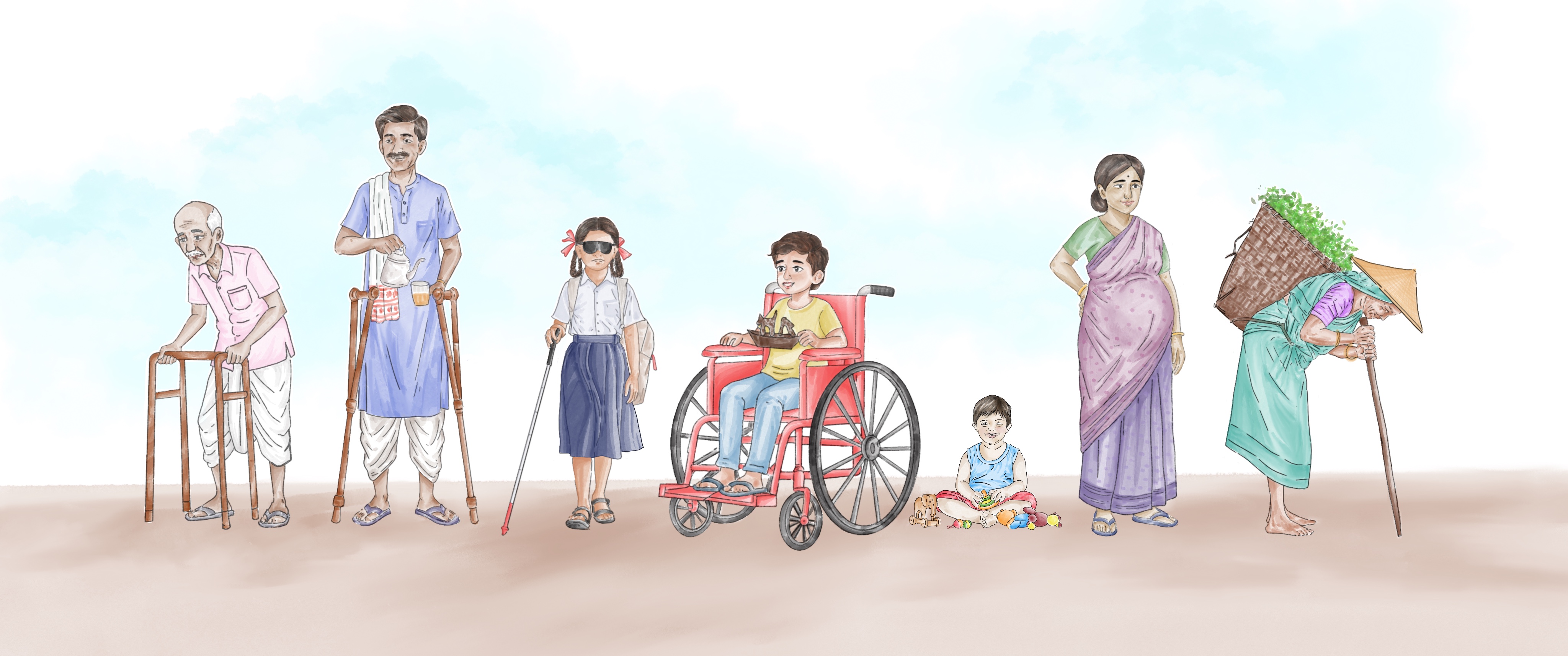
As a young professional who has recently started working in the disability sector through a Community-Based Inclusive Development (CBID) program with Shishu Sarothi. I have had the opportunity to engage directly with families and children with disabilities in rural Assamespecially in the select blocks of two districts of Morigaon and Goalpara.
My understanding has developed from interacting with the families while visiting their homes, talking with the parents during the Early Intervention (EI) services’ Outreach programs, and visiting Anganwadi centers and schools. Thus, a lot of what I understand will come as stories with the identities anonymized. This piece is my attempt to document insights from the field and open dialogue on the importance of addressing the layered and complex web of social realities in which our program exists.
During the course of my work, I observed a gap: services were available (in some forms), but many families struggled to access or use them consistently. Our program also showed long gaps and dropouts in follow-up sessions. Families cited structural barriers, which can come in themes of religion, caste, economic status, gender, housing, and education. Disability isn't the main issue; rather, it is how these intersecting identities affect access to care, education, and inclusion. Most disabilities we see are not genetic but influenced by caste, religion, gender, and ethnicity—factors inherited at birth that can also predispose individuals to disabilities
To see how family dynamics shape a child’s experience of disability, consider Kabir Ahmed (name changed) from Goalpara. When we visited, after he had missed coming to our EI Outreach Camps for over a year, Kabir sat in a chair, his torso tied with a gamusa. He has cerebral palsy. Earlier therapy had helped him sit upright and almost stand with support, but progress stalled once his visits became irregular.
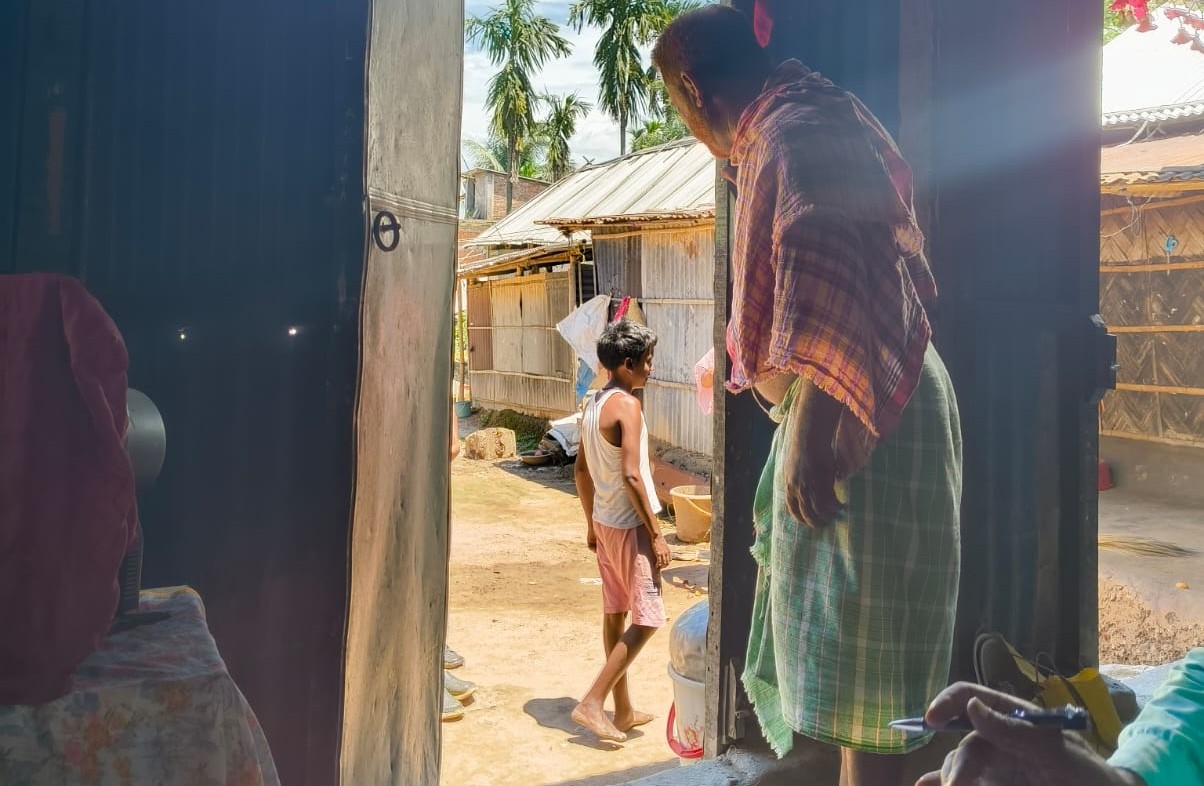
His 20-year-old mother was bathing her second child. She recognized the Field worker with me and said quietly, “I tried, but I could not.” Until eight months into her second pregnancy, she had carried Kabir to the EI camps alone. Her in-laws had disowned her and Kabir, blaming her “karma” for his condition. Her husband, a daily-wage labourer, returned home late and exhausted, leaving her as the sole caregiver. After the second child’s birth, time and energy ran thin. The family stopped Kabir’s seizure medication for lack of money, and her in-laws insisted she focus on the younger child, claiming only divine power could help Kabir. She told us, “I understand why you came, but I can’t promise I’ll attend the EI camp next time. I wil try. But how do I travel alone with two small children?” In their tin-roofed kutcha house, I had no answer. Kabir’s decline stemmed less from cerebral palsy than from the collapse of family and social support.
Such barriers begin before birth. The care a mother receives during pregnancy and delivery directly affects a child’s risk of disability. Our enrollment histories often reveal disabilities caused by failures in medical care, which are more common in rural areas where access to quality services depend on financial means.
Rehman’s story (name changed) illustrates this. He also has cerebral palsy. When his mother, from a religious-minority community, went into labor, the local ASHA was unavailable. At the nearest hospital, the doctor refused to see her, claiming he couldn’t understand her dialect, and nurses dismissed her, telling her to return later. Her family rushed her to another center, only to be told that no staff were available, telling them to go to Guwahati —77 kilometers away! By the time she arrived, complications had set in. She believes a private hospital or timely care at the first center could have changed the outcome. Other parents recount discharging newborns from NICUs early because they couldn’t afford the costs.
A family’s social identity shapes its social capital and thus its access to information and resources. This determines not just travel or residence but whether they know their rights, understand documents like the disability certificate or UDID card, and can navigate online applications.
These barriers persist through every stage of life: enrollment in the Anganwadi Centres, school admission and retention, skill training, and eventually employment—all are influenced by a family’s position in the social hierarchy. One fear many parents voice is stark and universal: “What will happen to my child when I’m gone?” With few safety nets or community supports, it remains a haunting question.
Debika (name changed), a mother at our Early Intervention camps, told me, “I wanted to send my child to the Anganwadi Centre, but it is usually closed. When it was open, they said I had to stay the entire time. The first school refused admission; the second accepted him but offered no special attention. “My son is in Class 4 now, but we miss many school days. I can’t sit with him all day—I have to run the household and take whatever small jobs I find. Teachers don’t really support us; they think there’s no point. He forgets things even after being taught once.”
Her story is common. Enrollment is often required to access schemes like Rashtriya Bal Swasthya Karyakrma (RBSK), yet many schools provide little real support.
Sumiya’s mother shared another quiet barrier: “I couldn’t continue either. As she grew older, carrying her became too hard. She doesn’t have a wheelchair—we applied but haven’t received it. The school has a ramp now, but how do I even get her there?” I had visited their home before and wondered, even with a wheelchair, how would they wheelit along the narrow, uneven path to the main road, littered with potholes and stones? How would they lift it onto a bus or autorickshaw? Mobility is far more than a single ramp.
Exclusion from school is about more than lost education. It means missing play, friendships, and the life skills vital to a child’s growth and development.
Most awareness messages, on nutrition, therapy, and entitlements, are directed at mothers, the primary caregivers. But how can they act independently when they themselves face caste, class, poverty, and mobility barriers, often alone?
It raises a larger question: What are we really doing when we place all responsibility on the caregiver without changing the ecosystem around them? We cannot focus only on the child in isolation. We need to examine the family, the neighborhood, the social norms, and how services are designed. Every story shared, and many still untold, are a reminder that disability is not an isolated condition; it is shaped, created, and
deepened by the world around it. We must keep asking: Who is missing, what is missing, and why?
Yet I have also witnessed immense strength, resilience, and care in these families. Their perseverance shows that change is possible—but only if our systems recognize that disability is deeply political and intersectional. I hope this piece prompts a shift from “How do we support children with disabilities?” to “How do we redesign systems to address the layered barriers families face long before and long after a diagnosis?”